
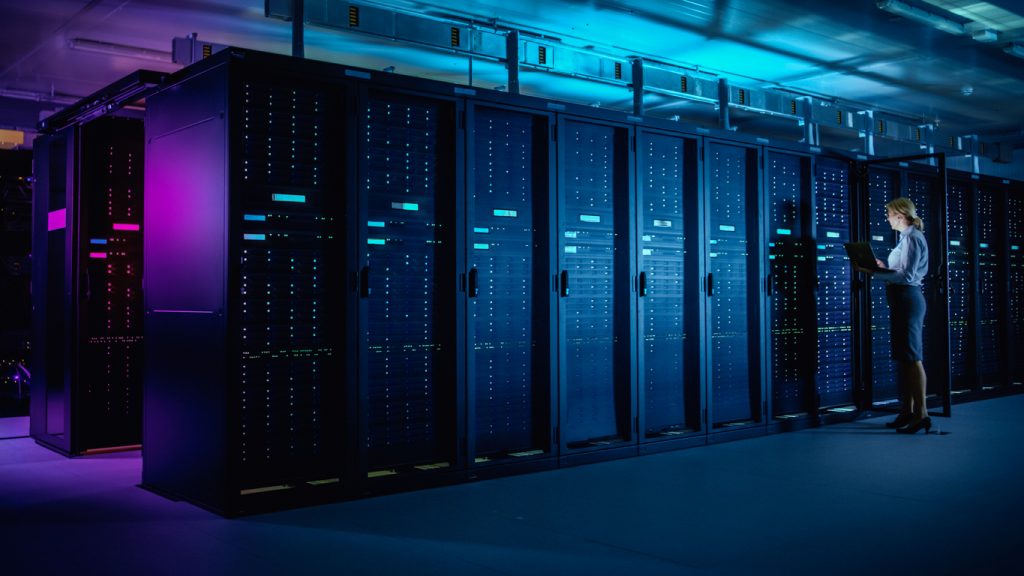
Iron ore, coal, LNG and wheat built modern Australia, and we have been very good at moving them to the world’s markets. But the world is changing what it buys. Increasingly, it wants intelligence on demand, and the unit in which that intelligence is measured and sold is the AI token.
To understand why that matters, it helps to understand what an AI token is. When an AI model reads or writes, it doesn’t handle whole words or sentences. It first breaks text into small chunks, and each chunk is a token. In English, a token might be a short word, a fragment of a longer one, or a piece of punctuation. “Cable” might be a single token, while “infrastructure” might be split into two or three. A useful rule of thumb is that one token is about four characters, or three-quarters of a word, so a thousand words comes to roughly 1,300 tokens. Images, audio and code are converted into tokens too, which is how modern models work across more than just text.
Tokens matter commercially because they are how AI is counted and billed. Every token sent to a model and every token it generates is metered, and providers typically charge per million. Producing each one takes computation, and computation takes chips, electricity and cooling. A token is, in effect, electricity and silicon converted into useful thinking.
That framing changes how we should think about the opportunity. If a token is processed electricity, any country with abundant, affordable and increasingly clean power, plenty of land and a trustworthy legal system can manufacture tokens at scale and sell them anywhere. Because tokens are just data, they travel at the speed of light down a fibre cable. There is no container ship, no port queue and no fuel bill.
Australia has an unusually strong hand. Our solar and wind resources are world class, and the renewable build-out is accelerating. Exporting raw electricity over long subsea cables has so far proven technically and commercially difficult, but converting that energy into tokens onshore and exporting the result sidesteps the problem. It is a way of exporting energy without a wire.
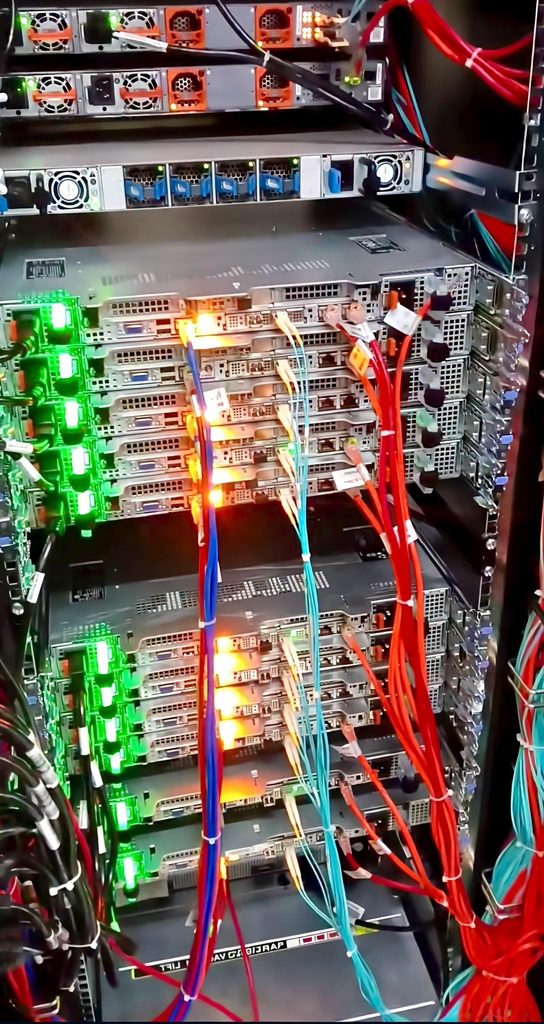
Energy alone isn’t enough, though. Customers need to trust where their workloads run. Australia offers strong rule of law, secure property rights, mature privacy and security regimes, and close alignment with trusted partners. For governments, banks, health providers and defence-adjacent users, jurisdiction is a feature rather than a footnote. Geography helps too. We sit beside the fastest-growing digital economies on earth, and Southeast Asia and the Pacific are hungry for AI services. Serving them from Australia means lower latency than serving them from North America or Europe, and our time zone suits follow-the-sun operations and capacity balancing across global providers.
None of this works without connectivity. AI inference is only valuable if tokens reach customers quickly and reliably, which makes subsea cables, diverse landing routes and terrestrial backhaul between our capital cities as important to this strategy as the data centres themselves. A country that treats its networks as an afterthought will end up as the end of the line. A country that invests in route diversity and resilient landing stations can become a regional hub.
This is where Inligo Networks’ investment in the Unite Cable System becomes significant. Unite is a terrestrial high-capacity cable linking the Asia Connect Cable system in Darwin with Adelaide, with further connections to Melbourne, Canberra and Sydney. It is designed to provide an alternate, low-latency, high-capacity path between those cities, with connections into Southeast Asia and the Indo-Pacific, all on a unified optical platform across the terrestrial and subsea systems. In practical terms, it gives tokens produced in southern and eastern Australia a diverse route north to the subsea cables that carry them to the region, and it gives Darwin a role as a digital gateway rather than just a landing point. Inligo has described the system as a low-latency terrestrial fibre network designed to improve national connectivity, improve network resilience, and support growing demand for AI and digital services. That combination of route diversity, low latency and resilience is what makes Australia credible as an exporter of intelligence, and it is already attracting interest from regional AI infrastructure developers, with Inligo working with major players on connectivity for emerging regional digital infrastructure in South Australia, NSW and Victoria.
The benefits reach well beyond the tokens. A new, high-value digital export would diversify an export base that is heavily concentrated in a handful of resources. Data centres employ relatively few people once built, but the ecosystem around them is far larger: engineers, electricians, network specialists, AI developers, security professionals and researchers. Large, predictable loads can also underwrite new renewable generation, storage and transmission, which benefits households and other industries. Significant onshore compute gives Australian researchers, startups and agencies access to capacity that isn’t wholly dependent on infrastructure elsewhere, and it earns us a voice in how AI is built and governed. And beyond raw tokens there is a market for AI-enabled products: software and models tuned to regional languages and conditions, and services in fields where Australia has real expertise, such as mining, agriculture, climate, health and education.
The caveats are real, and a credible case has to acknowledge them. Data Centres consume enormous amounts of power and, depending on design, water, and communities are right to ask about local impacts. Our grid connection and planning systems will have to move faster than they have recently. Advanced chips come from a small number of suppliers and are exposed to geopolitics. Interactive AI is latency-sensitive, so connectivity is a prerequisite rather than a bonus. And other nations with cheap energy, including some with naturally cooler climates, are chasing the same prize.
The countries that win will be those that line up energy policy, planning approvals, network infrastructure and skills at the same time, rather than treating each as a separate problem to be solved in sequence.
Australia has spent two centuries turning geology into wealth. The opportunity now is to turn sunshine, wind and good governance into intelligence, and to deliver it to a region that will need vast quantities of it. We won’t be the only supplier, but we hold more of the right ingredients than almost anyone. The question is whether we build with intent or watch the opportunity go to someone else.