

Last week Inligo Networks attended with other Territory Investors and the NT Government the NT Investment Summit 2026 a professionally run event where the theme on Digital Infrastructure Investment was front and centre to the summit together with critical energy investments.
Recent publications confirm Microsoft co-founder Bill Gates made a quiet visit to Western Australia from Melbourne earlier in the year specifically to scout hyperscale data centre opportunities in the Pilbara. The rationale behind the idea, as framed recently by the AFR and echoed in other coverage, is straightforward: eastern-seaboard data centre hubs like Sydney are increasingly grid-constrained, with connection queues for stretching years, while the Pilbara sits on some of the best solar and wind resources in the country and already hosts iron-ore miners building gigawatt-scale renewable generation for their own operations. Locating AI infrastructure there would let developers tap abundant, cheap renewable power directly, sidestepping congested urban grids altogether.
This isn’t happening in a vacuum. Andrew Forrest’s Fortescue has been building large-scale wind, solar and battery capacity in the Pilbara — including the proposed Uaroo Renewable Energy Hub, which could generate up to 5.4 GW from wind turbines, solar and battery storage — to decarbonise its mining operations. That kind of infrastructure could plausibly be repurposed or co-located with data centre demand. Gates and Forrest also have a long-standing relationship through the Giving Pledge (Forrest and his former wife Nicola were the first Australians to sign it) and joint ventures such as the Perth-based methane-reduction startup Rumin8, so a Gates-Pilbara connection fits an established pattern of collaboration. On the infrastructure side, NEXTDC have already built a Tier III edge facility (PH1) in Port Hedland, showing digital infrastructure is establishing a foothold in the region, largely to serve the mining and resources sector’s automation and IoT needs.
The National Backdrop
This regional push sits within a much bigger national story. Australia has signalled plans to roll out nearly 6 gigawatts of data-centre capacity worth about A$150 billion, with this year’s installed capacity expected to roughly triple by 2030. Between 2023 and 2025, companies announced Australian data centre investment plans (a major amount in Melbourne) that could scale up to more than $100 billion, with Australia ranking second globally after the US as a data centre investment destination in 2024. The federal government’s National AI Plan, released in December 2025, has since been followed by a formal set of expectations for developers — covering national interest, the energy transition, sustainable water use, local jobs and skills, and research capability — aimed at making sure the investment boom benefits Australian communities rather than just offshore hyperscalers.
Status of developments in Central/Northern Australia
The more concrete project currently underway isn’t strictly in the geographic centre of Australia, but in the Northern Territory’s outback — often grouped with “central Australia” in this context. Singapore-headquartered Energy North announced Project Ares in mid-2026: a proposed 1 GW hyperscale AI data centre campus at Murranji Station in the NT’s Barkly Region, roughly 683 km south of Darwin and 50 km northwest of Elliott. It would be entirely “behind the meter” — not connected to the public grid — drawing on up to 3 GW of solar generation, 16 GWh of battery storage, and 900MW–1.1GW of gas-fired backup generation across a 7,000-hectare solar footprint. The first phase targets 500 MW and an estimated A$11.9 billion investment, though how it will be funded remains unclear. The company says the site could eventually scale to 5 GW, and it’s planned as a co-located project with Project Sol, a green hydrogen and ammonia venture due online in 2033.
Project Ares has been listed on the federal government’s roster of “current major projects” and is progressing through environmental approval under national environment law.
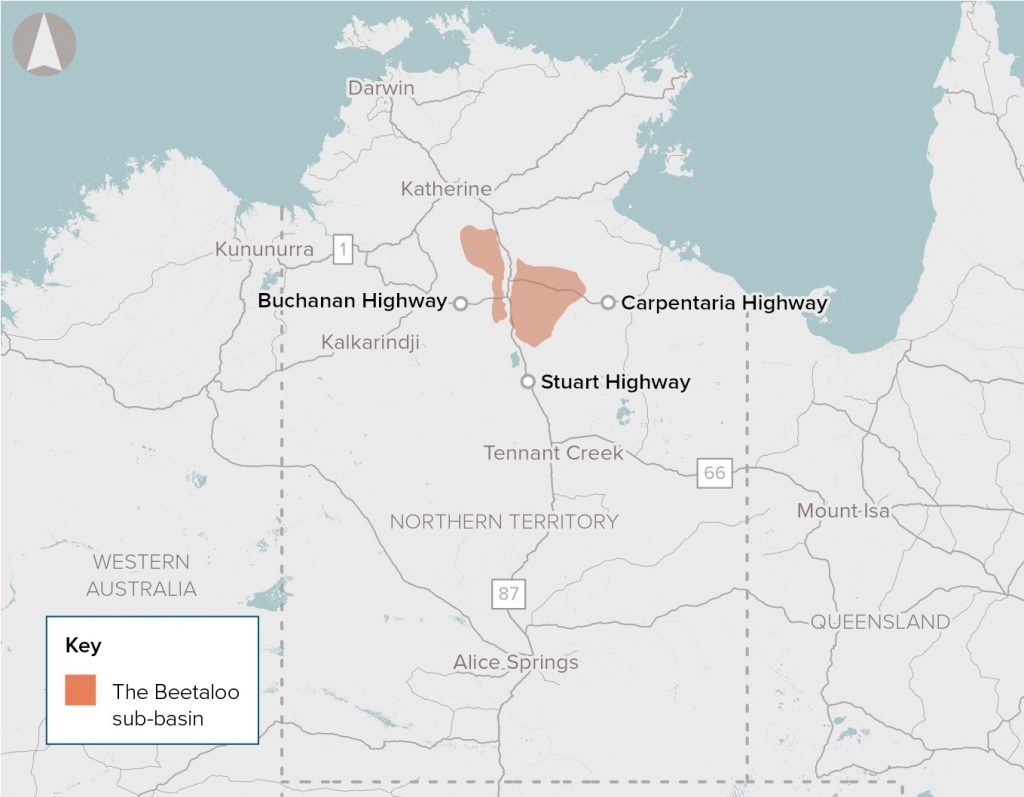
Connectivity is the other critical piece of the puzzle, and this is where Inligo Networks comes in. The Singapore and Melbourne based company is currently building the Unite Cable System, a high-capacity terrestrial fibre network linking Darwin to Adelaide, with connections to Melbourne, Canberra and Sydney. Granted Major Project Status by the NT Government in 2024, Unite is designed to run the length of the country and is specifically positioned to connect emerging inland compute hubs — including the Beetaloo Basin and the Elliott area, near where Project Ares would connect into the rest of the national fibre network. It ties into Inligo’s Asia Connect Cable (ACC-1), an international subsea system landing at a new Cable Landing Station the company is building in Fannie Bay, near Darwin’s CBD, which is expected to be complete around 2027.
Together, ACC-1 and Unite will position Darwin as a low-latency digital gateway between Southeast Asia and Australia’s southern capitals, giving remote NT data centre developments — which otherwise sit hundreds of kilometres from any major population centre — a viable path to both international and domestic bandwidth. This connectivity build-out is widely cited by NT government and industry sources, alongside projects like SunCable, as a key reason the Territory believes it can attract hyperscale operators despite its remoteness.
More broadly, the Northern Territory government is actively marketing itself as a hyperscale data centre destination, pointing to serviced greenfield land at the Wishart Estate Digital Hub near Darwin. In the near term, the NT is leaning on natural gas alongside renewables to meet power demand, with genuinely large-scale clean energy capacity not expected online until around 2028 — a similar bind to the one prompting interest in the Pilbara’s more renewables-heavy grid.