
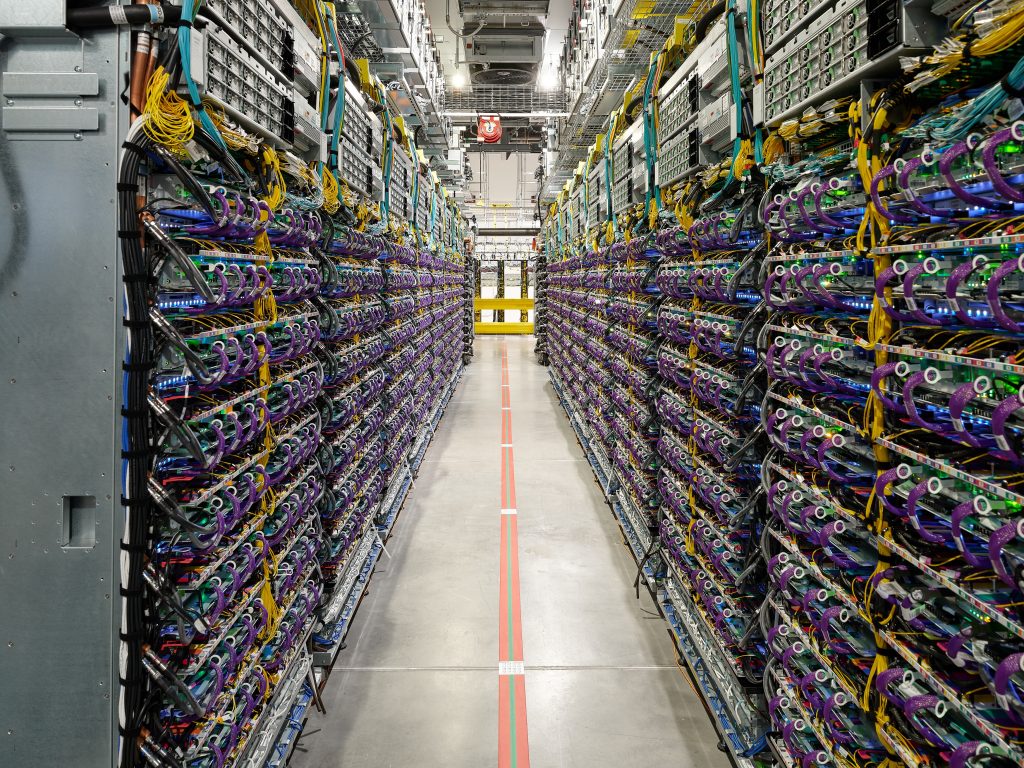
South Australia is positioning itself as one of the country’s compelling locations for large-scale data centre development. At the centre of this push is the Aurora Energy Precinct near Port Augusta, a 15.8 square kilometre site controlled by ASX-listed clean energy company 1414 Degrees. The precinct combines up to 900 MW of potential solar generation with an approved 140 MW/280 MWh battery storage system and access to high-voltage transmission infrastructure, making it a natural fit for the enormous and continuous power draw of modern AI computing.
That potential is now converting into real commercial momentum. 1414 Degrees recently signed a non-binding Heads of Agreement with an Australian data centre developer for a project that could scale to as much as 1 GW of AI infrastructure. Rather than waiting for the entire precinct to be built out before switching anything on, the partners are pursuing a staged, modular deployment model, bringing compute capacity online in step with available power. It’s a pragmatic approach to a national problem: data centre demand across Australia is growing far faster than traditional grid build-out timelines, and staged rollouts let capital start earning a return earlier while de-risking the wider build.
1414 Degrees itself is not simply a landlord for the Aurora site — the company is actively shaping its own development plans around the precinct, positioning Aurora’s mix of solar, storage and grid connection as the foundation for a broader campus of energy-aligned digital infrastructure rather than a single tenant. That staged approach is designed to let 1414 Degrees bring successive stages of renewable generation and storage online in lockstep with confirmed data centre demand, reducing the risk of stranded power assets while giving incoming operators a credible, de-risked path to the energy they need.
Port Augusta and its surrounding region have quickly become one of the more contested pieces of real estate in Australia’s AI infrastructure build-out. AI infrastructure company Firmus Technologies has confirmed that a site near Port Augusta — alongside another at Tailem Bend — forms part of its “Project Southgate” AI factory strategy, a national network of Nvidia-backed, liquid-cooled “AI factories” being developed in partnership with CDC Data Centres. Firmus has said its South Australian builds will be underpinned by new investment in renewable generation and firming capacity, with further details expected in the months ahead.
Just up the road, at Bundey in the state’s Mid North, Nasdaq-listed IREN has announced an 800 MW AI data centre campus — its first in Australia and one of the largest such developments announced in the Asia-Pacific region. The roughly $10 billion project will connect directly into ElectraNet’s Bundey substation, drawing on four 330kV feeder exits capable of supporting 800MW without further network upgrades, and is due to begin energisation in stages from 2028. IREN has pointed to submarine fibre connectivity into major regional demand centres — including Singapore, Indonesia, South Korea and Japan — as part of the site’s appeal, alongside its access to a grid that is expected to be fully powered by net renewable energy by the time the campus opens.
This fits into a much bigger national and state picture. The federal government’s Data Centre Advisory Group has already endorsed 15 projects worth close to $52 billion for prioritised approval support, and South Australia has moved to formalise its own pitch through a proposed Data Centre and AI Infrastructure Act, which would designate data centres as essential infrastructure, create a dedicated planning pathway, and streamline approvals — while still requiring developers to demonstrate adequate power and water supply. Premier Peter Malinauskas has framed the strategy around the state’s renewable energy leadership and its ambition to become a hub for AI investment in the Asia-Pacific.
But compute and power are only half the equation — a data centre precinct is only as valuable as its connectivity to customers, cloud regions and international markets. This is where Inligo Networks’ infrastructure becomes significant for South Australia.
Inligo is currently building the Unite Cable System, a high-capacity, low-latency terrestrial fibre network that is rolling out in stages to link Darwin with Adelaide, Melbourne, Sydney and Canberra, plus regional centres along the route including Whyalla, Port Augusta and Tarcoola — corridors that run directly past the Aurora precinct. Unite has been awarded Major Project Status by the Northern Territory Government and is being built with a minimum capacity of 23 Tbps per fibre pair, giving it substantial headroom for AI-scale data traffic.
Unite’s real strategic value comes from what it plugs into in Darwin: Inligo’s Asia Connect Cable (ACC-1), an approximately 19,000-kilometre subsea system linking Australia to Guam, Indonesia, the Philippines, Singapore, Timor-Leste and California, targeted to begin operating in 2029. Together, Unite and ACC-1 create a single, unified optical path stretching from Adelaide all the way to Southeast Asia and the US West Coast.
For South Australia, that combination matters in a very practical sense. Data Centres and energy precincts like Aurora need more than power — they need a diverse, low-latency route to international bandwidth so that operators aren’t solely reliant on international capacity through Sydney or Perth. By giving Adelaide a direct terrestrial link into the new subsea cable landing in Darwin, Inligo’s network offers an alternative, resilient path into the fast-growing digital economies of Southeast Asia, reducing single-point-of-failure risk and improving latency for regional and international customers alike.
In short, Aurora, Firmus and IREN are supplying the power, the land and the capital; Unite and ACC-1 can supply the pipe to the world. Together, they give South Australia a genuinely competitive pitch to hyperscalers and AI infrastructure developers: renewable energy at scale, multiple large-scale sites already in development around Port Augusta and the Mid North, and resilient, low-latency connectivity into the Indo-Pacific.